Utilizing virtual replicas of physical assets to run complex simulations.
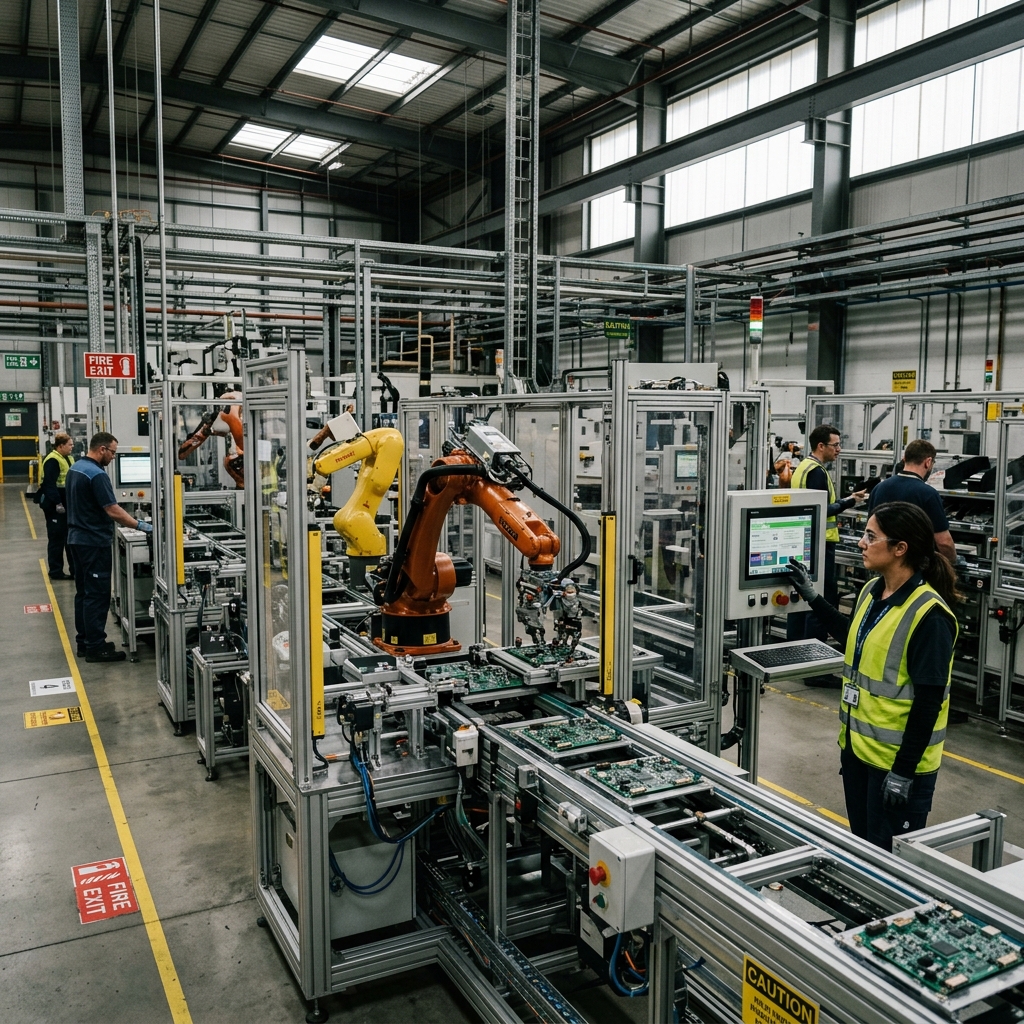
Digital twins are highly complex virtual representations of physical assets, updated continuously via real-time telemetry from the factory floor. They allow engineers to test scenarios, forecast performance, and predict failures without ever risking actual production.
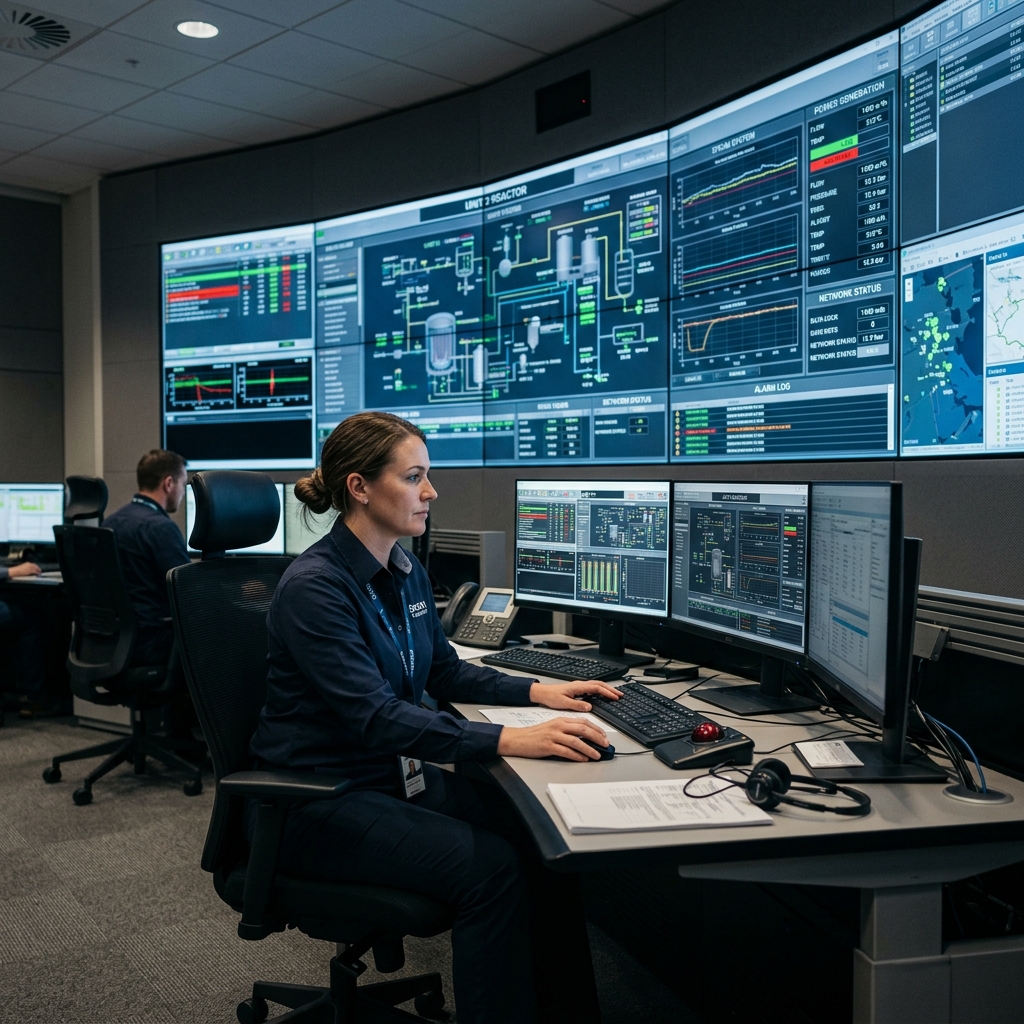
By synchronizing data from thousands of IIoT sensors with high-fidelity 3D and mathematical models, companies achieve near-perfect accuracy in their operational planning. The digital twin has evolved from a simple 3D CAD model into a living, breathing digital organism.
publicThe Cost of Physical Prototyping
In traditional manufacturing, optimizing a production line required physical downtime. Changing a conveyor speed or a robotic path meant stopping production, making the change, and hoping the physical reality matched the engineering theory.
Physical prototyping and trial-and-error optimization are prohibitively expensive. The industry needed a way to simulate physics, fluid dynamics, and kinematic stresses in a risk-free environment that perfectly mirrored the current state of the factory.
memoryBi-directional Synchronization via MQTT
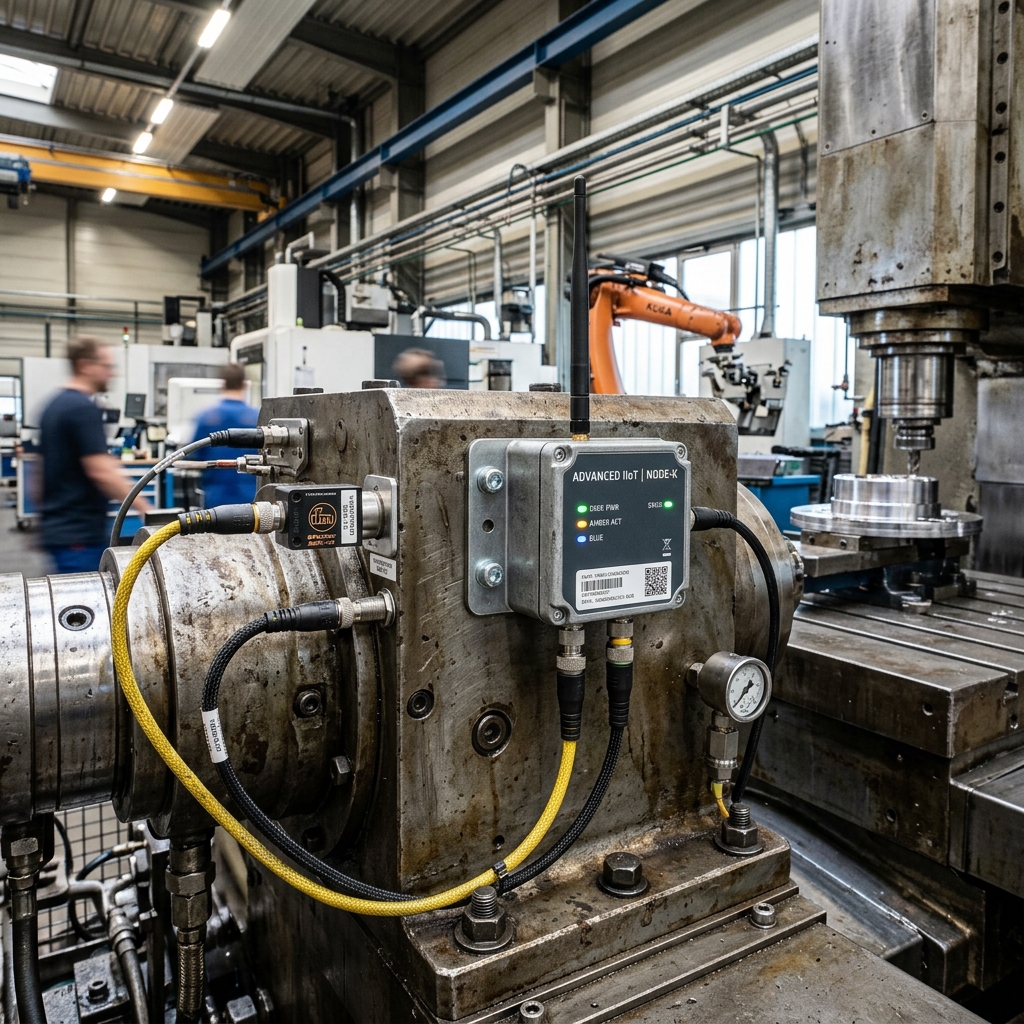
A true digital twin requires a bi-directional data flow. Telemetry flows up from the physical asset (via lightweight protocols like MQTT) to update the virtual model. Conversely, optimized parameters calculated by the virtual model can flow down to update the physical PLC parameters.
The mathematical models within the twin use multi-physics simulation. For a CNC machine, the digital twin calculates tool wear based on the exact spindle speeds, material hardness, and vibration data currently being experienced on the floor, updating its 'Remaining Useful Life' prediction every millisecond.
precision_manufacturingSimulation in High-Stakes Environments
Wind Turbine Farms
Digital twins of offshore turbines analyze wind shear data across the entire fleet to dynamically adjust blade pitch on individual turbines, maximizing aerodynamic efficiency and minimizing gearbox stress.
Automotive Stamping
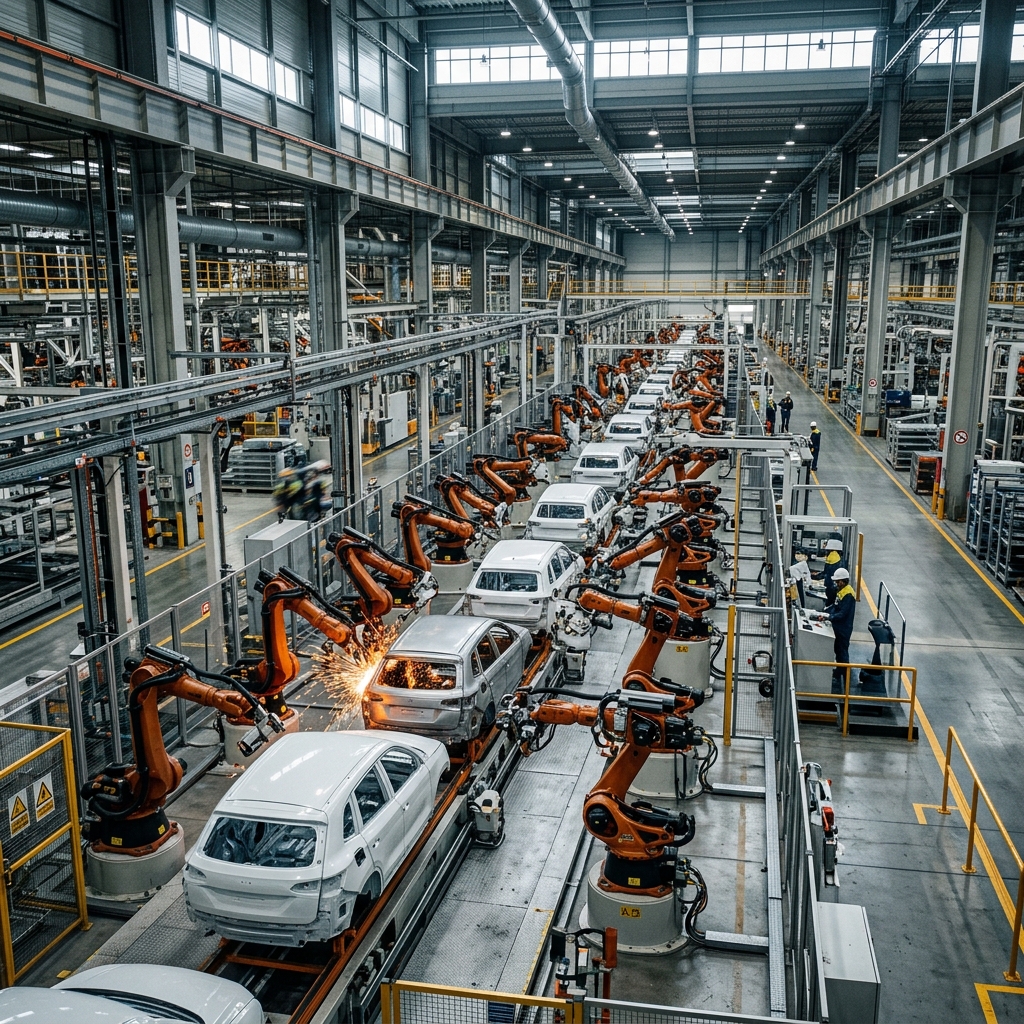
Simulating the exact thermal expansion of massive metal stamping presses to adjust timing sequences, preventing micro-tears in the sheet metal during high-speed production.
Logistics Hubs
Creating a digital twin of an entire automated warehouse to run monte-carlo simulations on AGV (Automated Guided Vehicle) routing, completely eliminating traffic jams during peak holiday volumes.
trending_upAccelerated Time-to-Market
The ROI of digital twins is most evident in commissioning times. Virtual Commissioning allows software engineers to write and test the PLC code against the digital twin months before the physical factory is even built. When the hardware arrives, the code is already proven.
This parallel workflow reduces time-to-market by up to 40%. Additionally, predictive maintenance insights generated by the twin drastically reduce catastrophic machine failures, preserving capital expenditure.
Data Integrity is the Foundation
"A digital twin is only as intelligent as the telemetry feeding it. If your physical sensor data has high latency or poor resolution, your twin is hallucinating. Invest heavily in the edge-sensor network before investing in the 3D visualization."
V. Gupta
insightsThe Industrial Metaverse
The convergence of Digital Twins and Extended Reality (XR) is paving the way for the Industrial Metaverse. Remote experts wearing spatial computing headsets will be able to 'step inside' a digital twin of a factory located across the globe, collaborating on repairs or layout changes in real-time 3D space.
Furthermore, cognitive digital twins will incorporate Generative AI to autonomously suggest design improvements for the next iteration of the physical asset based on years of accumulated telemetry data.