How machine learning and neural edge processing are optimizing production lines in real-time.
The landscape of manufacturing is undergoing a profound transformation driven by Artificial Intelligence. Smart factories are no longer a futuristic concept but a present-day reality for leaders in the industrial sector. By integrating neural edge processing directly into the production line, companies are reducing latency to sub-millisecond levels, enabling autonomous decision-making that was previously impossible.
As we transition deeper into the Industry 4.0 era, the focus is shifting from simple automation—doing the same task repeatedly—to intelligent autonomy, where systems can adapt, learn, and optimize without human intervention. This shift represents the most significant leap in industrial productivity since the assembly line.
publicThe Shift Towards Autonomous Production
For decades, the manufacturing sector relied on rigid, pre-programmed logic controllers. While effective for mass production, these systems faltered in high-mix, low-volume scenarios. Today's supply chains demand unprecedented agility.
Furthermore, the widening skills gap in advanced manufacturing has forced companies to accelerate their digital transformation. AI-driven smart factories address these challenges by creating systems that not only self-regulate but also continuously analyze their own operational telemetry to discover hidden efficiencies.
memoryNeural Edge Processing & Swarm Intelligence
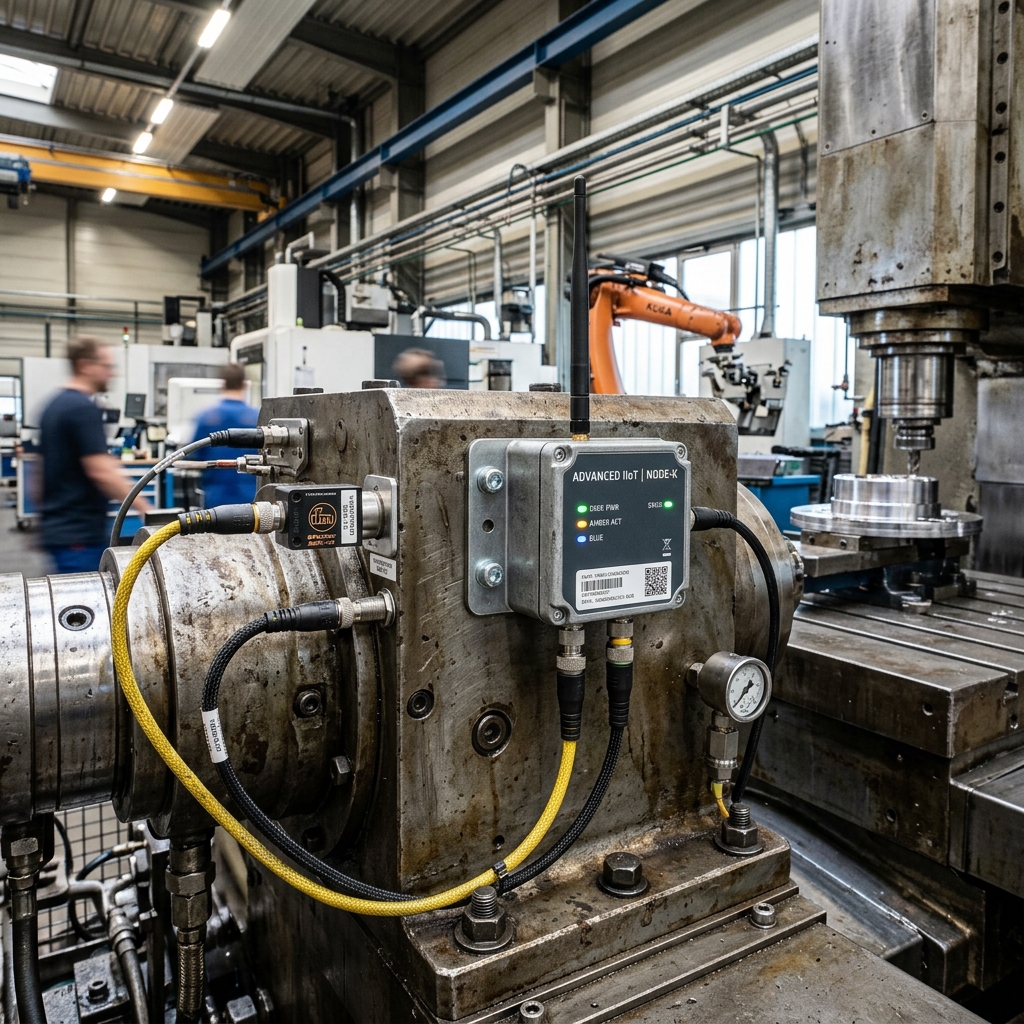
The core of modern smart factory architecture is Neural Edge Processing. Instead of sending massive amounts of sensor data to a centralized cloud—which introduces latency and security risks—machine learning models are deployed directly onto the industrial edge hardware (PLCs and IPCs).
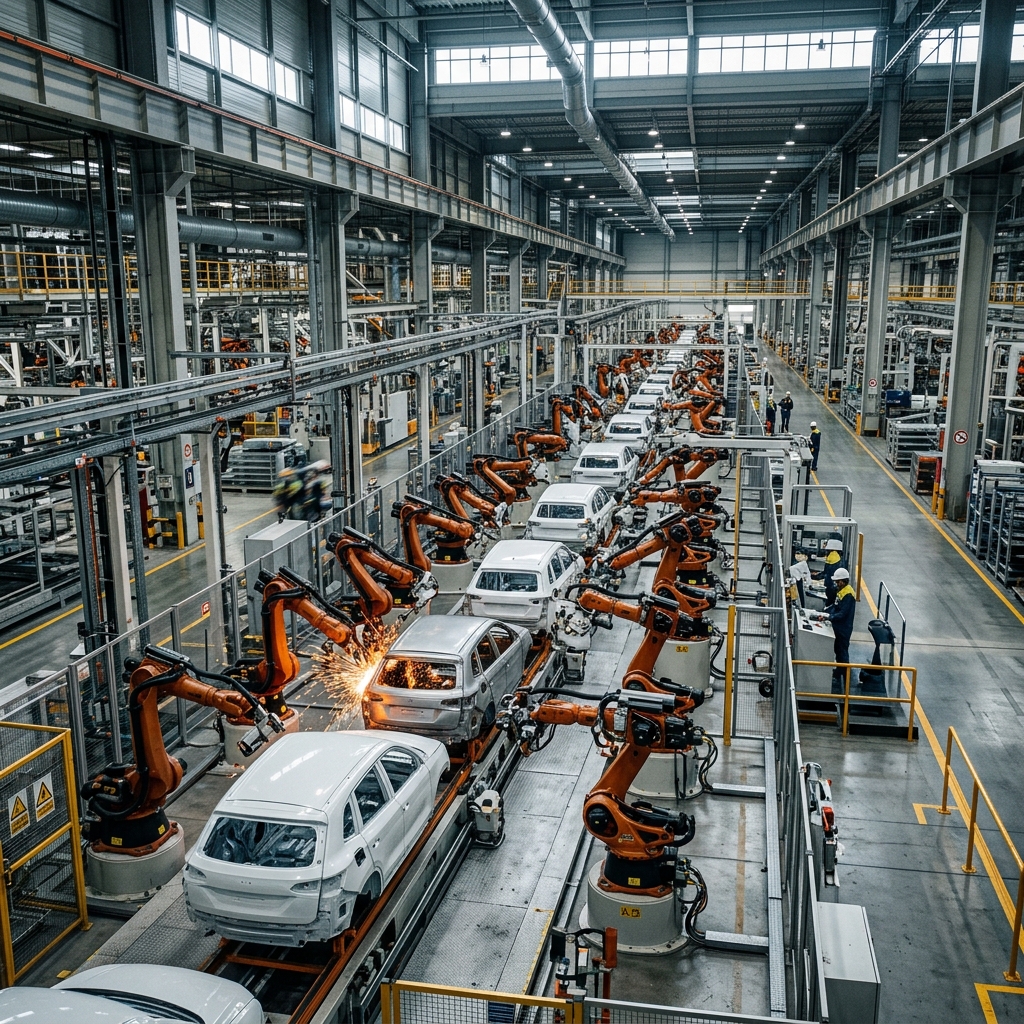
This architecture enables 'Swarm Intelligence' among robotic units. A cluster of robotic arms can communicate their spatial coordinates, payload stress, and cycle times to each other in real-time via high-speed 5G or TSN (Time-Sensitive Networking). If one unit detects an anomaly or a micro-delay, the rest of the swarm instantaneously adjusts their speeds to prevent a bottleneck.
precision_manufacturingCross-Industry Implementation Scenarios
Automotive Manufacturing
Dynamic paint-shop optimization using computer vision to detect microscopic surface defects in real-time, adjusting robotic spray paths autonomously.
Semiconductor Fabrication
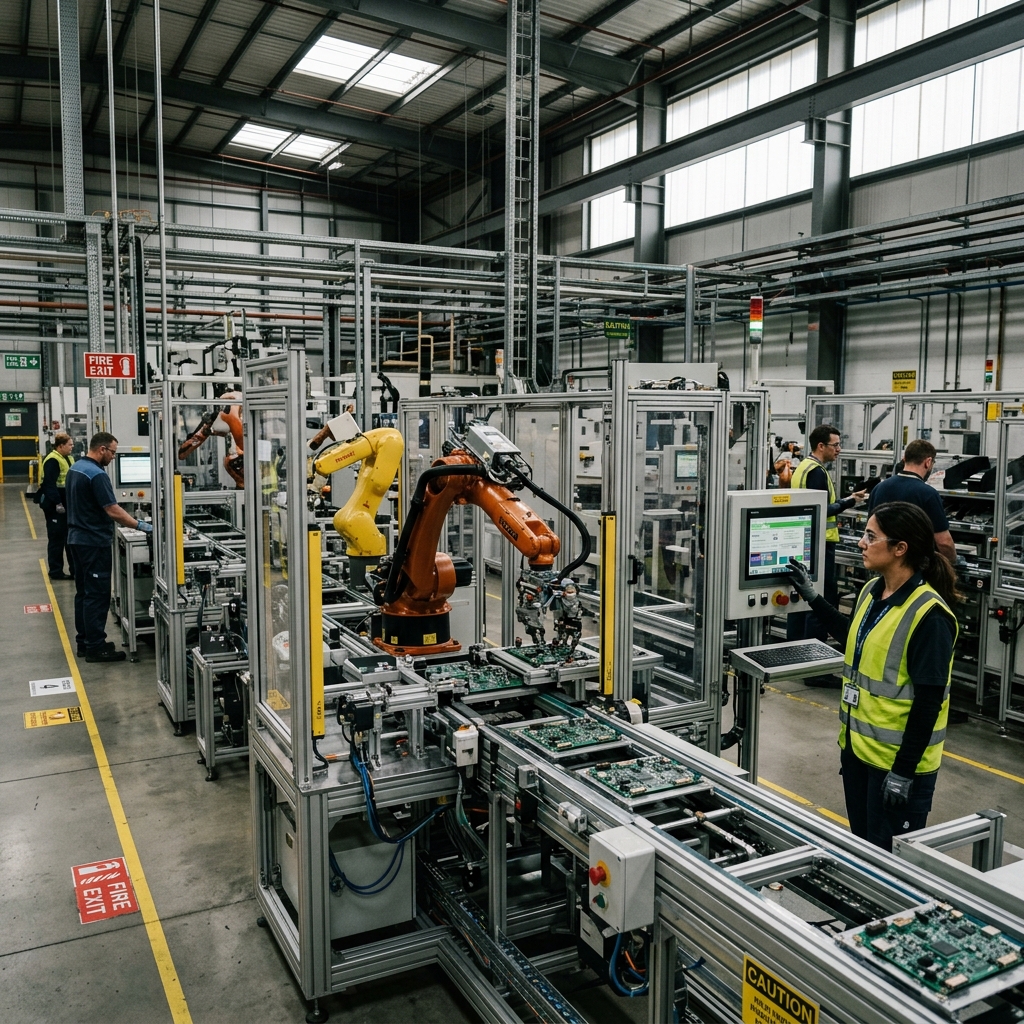
Sub-nanometer precision alignment and predictive environmental control to maintain absolute clean-room integrity during wafer processing.
Food & Beverage
Real-time mass and moisture analysis using edge-AI to instantly adjust oven temperatures and conveyor speeds, ensuring 100% batch consistency.
trending_upMeasurable ROI & Operational Impact
The financial implications of AI integration are staggering. Beyond the obvious reduction in manual labor costs, the true value lies in the elimination of micro-stops and unplanned downtime. A smart factory operates with a continuous, fluid rhythm.
Enterprises implementing full-stack AI automation report up to a 35% increase in Overall Equipment Effectiveness (OEE) within the first 12 months. Energy consumption drops proportionally as machines dynamically power down during idle micro-cycles.
Strategic Implementation Note
"True industrial AI isn't about replacing the human workforce; it's about elevating human operators to system architects. The most successful deployments occur when domain experts train the algorithms, merging decades of intuition with the computational power of the neural network."
Dr. A. Kumar
insightsThe Horizon: Generative Manufacturing
Looking forward, we anticipate the rise of Generative Manufacturing—where AI doesn't just optimize an existing process, but actively designs the process itself. By feeding production goals and material constraints into a generative model, the system will output the optimal robotic pathing, tool selection, and cycle timing.
The integration of Large Language Models (LLMs) with industrial control systems will soon allow plant managers to query their factory floors using natural language, receiving instant diagnostic reports and optimization suggestions.