The critical role of high-accuracy robotic cells in high-tech manufacturing.
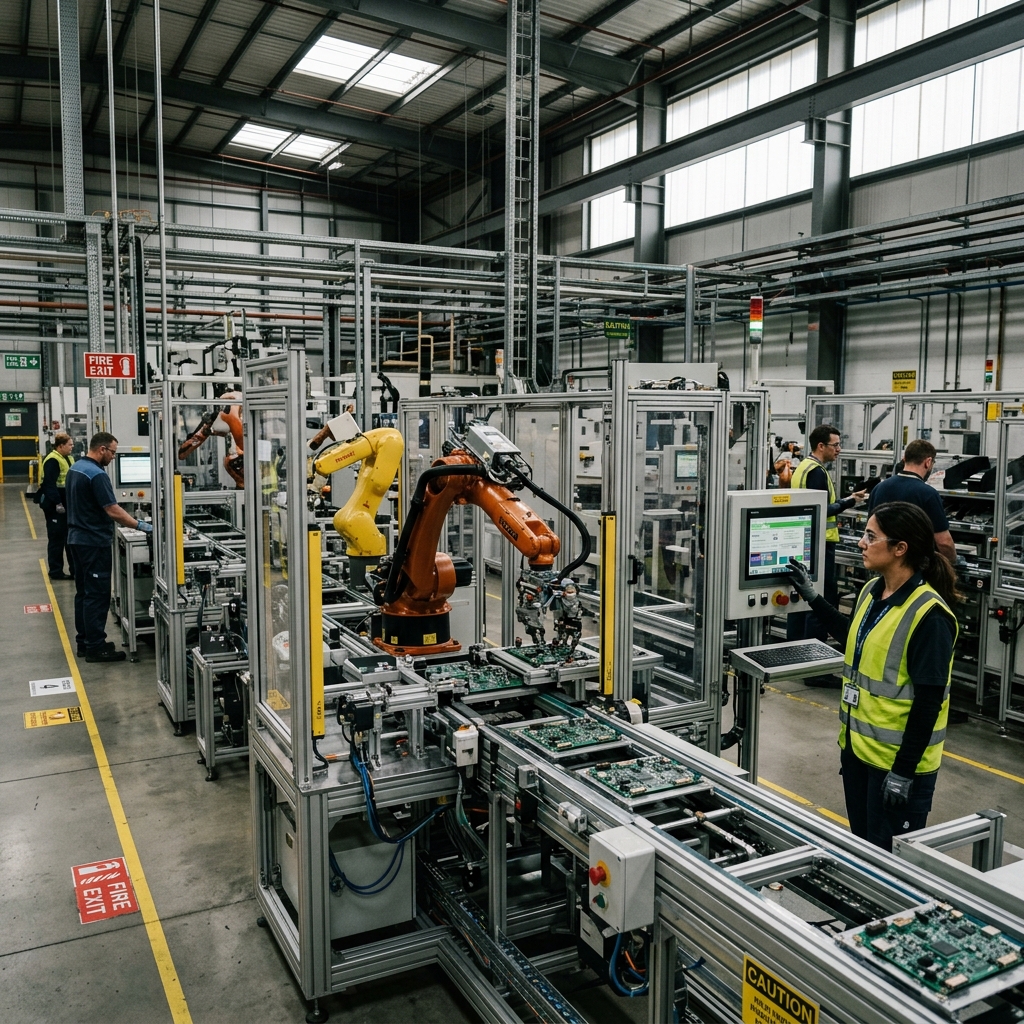
Modern assembly lines require a level of precision that human operators simply cannot sustain over long shifts. High-accuracy robotic cells, equipped with advanced vision systems and force-feedback sensors, are redefining what is possible in electronics, aerospace, and medical device manufacturing.
The evolution from rigid, blind robots to highly perceptive, collaborative systems represents a paradigm shift. Today's robots don't just execute a path; they feel, see, and adapt to their environment in real-time.
publicOvercoming Human Limitations
As product components shrink—particularly in the semiconductor and consumer electronics sectors—the tolerances for assembly error have vanished. Micro-soldering and sub-millimeter component placement are physically beyond human repeatability at scale.
Furthermore, the demand for mass customization requires assembly lines to switch product profiles rapidly. Rigid mechanical automation takes weeks to retool; modern robotic cells can be reprogrammed and recalibrated via software in minutes.
memoryVision-Guided Kinematics & Force Control
The leap in precision is driven by the integration of 3D vision systems and 6-axis force-torque sensors. A vision-guided robot captures a point-cloud of the workspace, dynamically calculating the exact orientation of a part before engaging.
Force-torque sensors allow the robot to 'feel' resistance. In a peg-in-hole assembly task, if the robot feels unexpected lateral resistance, it micro-adjusts its angle instantaneously rather than forcing the part and causing damage. This tactile feedback loop operates at over 1,000 Hertz.
precision_manufacturingHigh-Fidelity Assembly Scenarios
Medical Device Manufacturing
Assembling micro-surgical tools where robotic arms utilize force-feedback to ensure delicate components are snap-fitted together without micro-fracturing the plastic housings.
Aerospace Engineering
Automated riveting of aircraft fuselages, where vision systems map the exact curvature of the metal in real-time to adjust the drill angle to a perfect 90 degrees.
EV Battery Production
High-speed stacking of delicate battery cells. The robots use thermal imaging and precise tension control to handle the volatile materials safely and efficiently.
trending_upYield Rates and Scalability
The primary business driver for precision robotics is the dramatic increase in First Pass Yield (FPY). By eliminating human error and handling damage, scrap rates plummet. In high-value manufacturing like aerospace or silicon wafers, saving a single batch from scrap can justify the robotic cell's ROI.
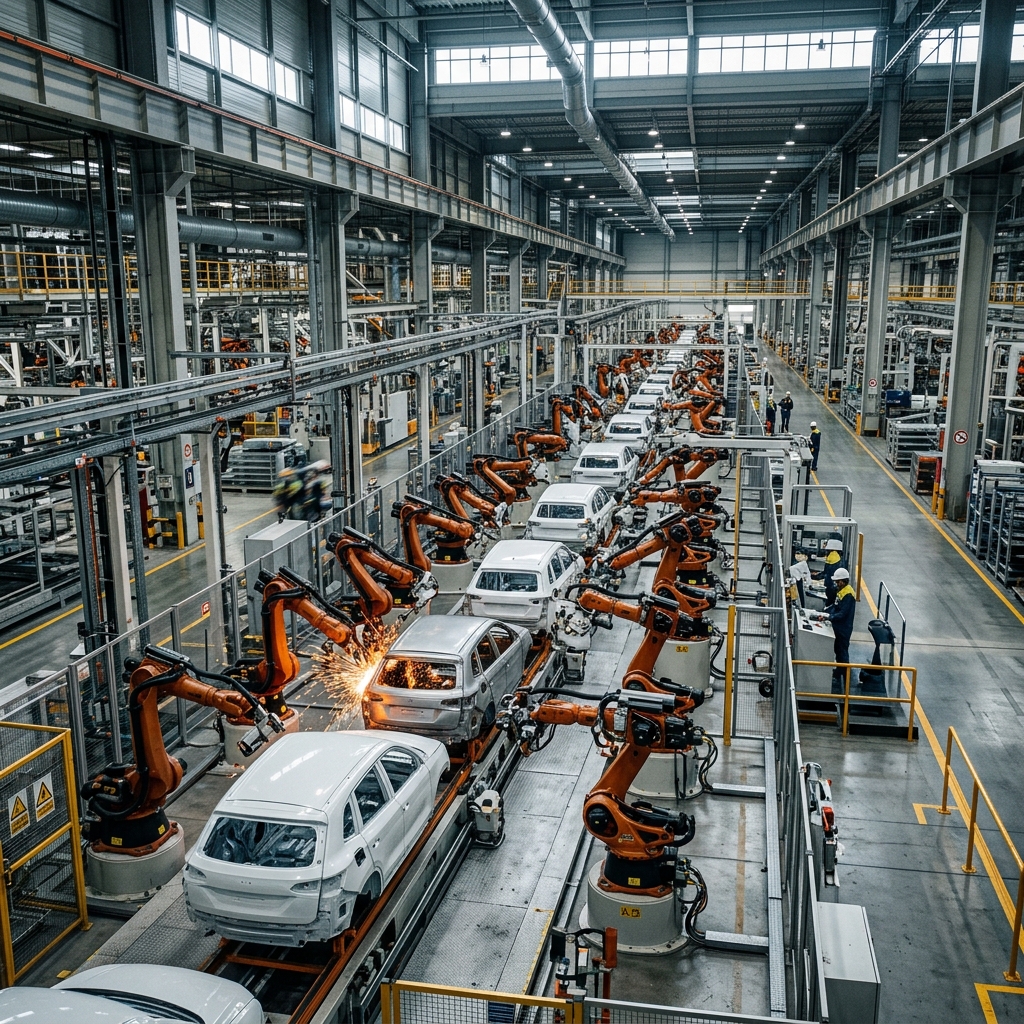
Additionally, precision robotic cells are highly modular. A company can scale production linearly by simply duplicating the robotic cell, knowing that cell #10 will operate with the exact same precision as cell #1.
The Reality of Tactile Automation
"We spent years trying to make robots perfectly rigid to ensure accuracy. The breakthrough came when we gave them sensors to feel their mistakes and the software intelligence to correct them in real-time. Flexibility, not rigidity, is the key to true precision."
R. Sharma
insightsSoft Robotics & AI Trajectory Planning
The next frontier is 'Soft Robotics'—effectors made of compliant materials that mimic the dexterity of the human hand, allowing robots to handle fragile or irregularly shaped organic items (like food processing).
Simultaneously, AI trajectory planning is eliminating the need for manual robotic programming. Engineers will simply provide the CAD models of the parts, and the AI will automatically calculate the most efficient, collision-free path for the robotic arm to complete the assembly.